
Makkah & Madinah
Choosing a Makkah Hotel: Proximity, Access and What “Distance” Really Means
How to choose a hotel in Makkah for Umrah: the Clock Tower and Jabal Omar areas versus shuttle hotels farther out, elevators at prayer times, levels and entrances, mobility needs, and how to read distance claims.
This guide is awaiting review by a qualified scholar/travel specialist. Treat it as general information, and consult a qualified scholar for personal religious rulings.
Quick answers
- Is it worth paying more to stay close to the Haram?
- For many pilgrims, yes. A short walk makes it realistic to pray all five prayers in the mosque and rest between them. The value is greatest for older travelers, families with young children and short trips.
- What is the difference between the Clock Tower and Jabal Omar areas?
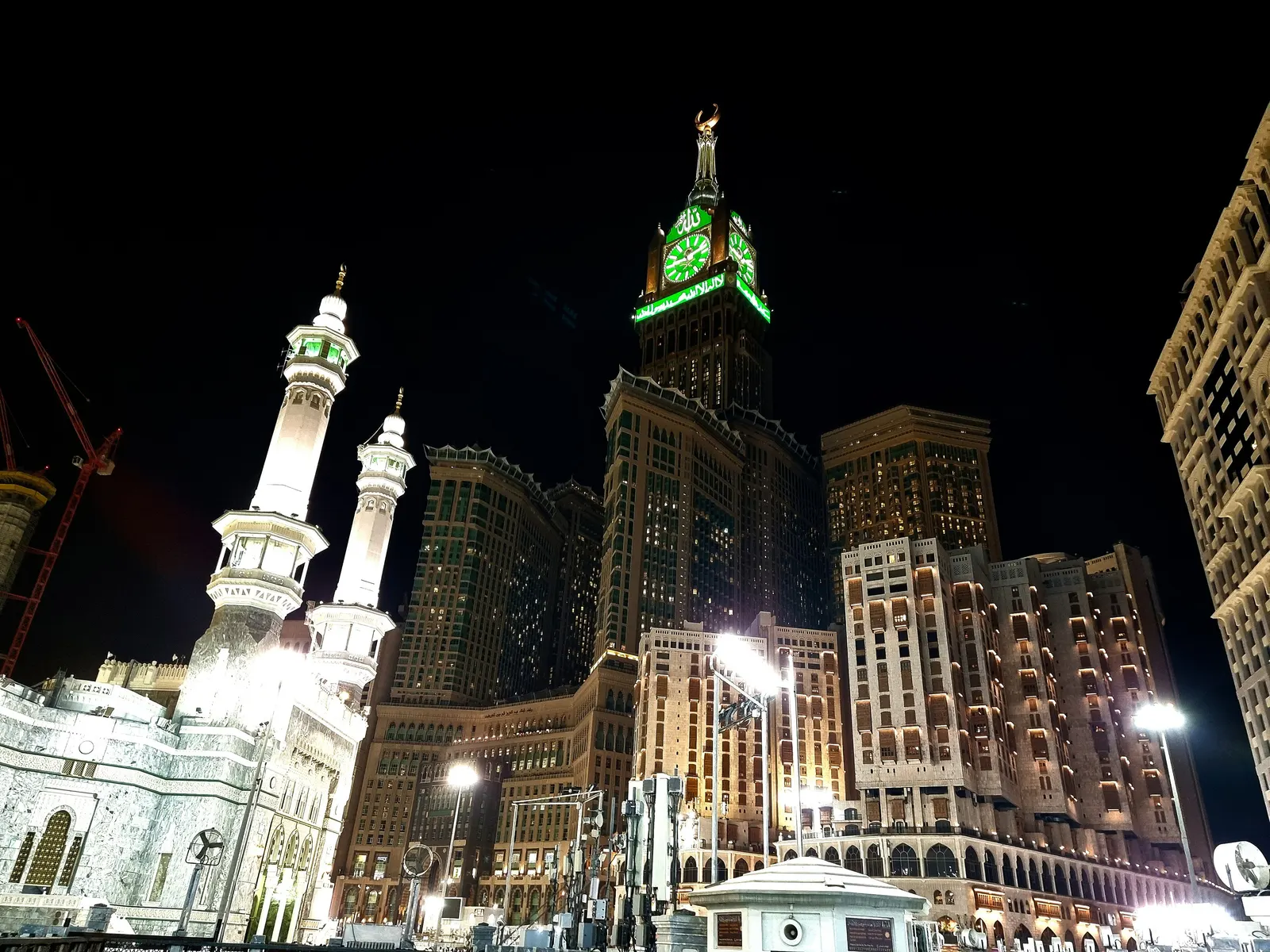
- Both are large hotel developments on the edge of the central area. The Abraj Al Bait (Clock Tower) complex sits on the south side of the mosque, and Jabal Omar lies to the west. The best choice depends on the specific building, its entrances and your route to the gate you will use.
- What is a shuttle hotel?
- A hotel farther from the Haram, for example in areas such as Kudai, that runs a bus or shuttle to points near the mosque. These are usually more affordable, but you depend on the shuttle schedule and road traffic, which can be heavy around prayer times.
- How should I judge a hotel’s distance claim?
- Ask for the walking route from the hotel’s exit to a named mosque entrance, not a straight-line distance. Ask whether the route involves hills, tunnels, stairs or crowded plazas, and whether it changes at prayer times.
- Why do elevators matter so much?
- In tall hotels near the Haram, many guests leave and return at the same times around each prayer. Elevator waits at those moments can be long, so a lower floor or a building with more elevators can make a real difference.
Your hotel in Makkah shapes your entire Umrah. It decides how often you can pray in the Masjid al-Haram, how much you rest, how tired your parents or children become, and how much of your budget goes on location rather than comfort. This guide explains the main hotel areas, the practical details that brochures rarely mention, and the questions to ask before you choose.
Why proximity matters
Most pilgrims want to be in the mosque as much as possible. When the walk is short, it becomes realistic to go for each prayer, return to rest, and go back again. When the walk is long or depends on a shuttle, many people end up staying in the mosque for hours between prayers or praying at the hotel instead.
Proximity matters most when:
- You are traveling with elderly parents, young children or anyone who tires easily
- Your trip is short and every day counts
- You are traveling in a warm month, when midday walks are hard
- You plan to perform more than one Tawaf or spend long hours in the mosque
If you are young, fit and on a tight budget, a hotel farther out may be a sensible trade. The key is to choose knowingly.
The main hotel areas
Abraj Al Bait (the Clock Tower complex)
The Clock Tower complex stands on the south side of the mosque and contains several hotels in connected towers above a large shopping mall. Its main appeal is that it faces the mosque’s plazas directly, so the walk from the building’s exits to the mosque courtyard is short. Hotels in the complex vary widely in size, room type and price, and some rooms have views of the Haram.
Things to ask about: which tower the room is in, which exit you will use, and how busy the elevators and lobbies are around prayer times.
Jabal Omar
Jabal Omar is a newer development to the west of the mosque, with many hotels, restaurants and shops. Some buildings are close to the plazas; others are farther up the development, which sits on rising ground. The experience can differ a lot from one hotel to the next, so compare the specific building rather than the area name.
Other central streets
Other hotels sit on the streets around the central area, including along Ibrahim Al Khalil Street and in the Ajyad area. Some are a short walk away; others involve slopes, tunnels or longer routes. Again, the specific building and route matter more than the neighborhood label.
Shuttle hotels farther out
Hotels in areas such as Kudai and other districts beyond the central area often run shuttle buses to drop-off points near the mosque. They can offer larger rooms and lower prices. The trade-offs are:
- You depend on the shuttle timetable, which may be reduced late at night
- Roads around the Haram become very congested before and after prayers, and some roads close to traffic at peak times
- Drop-off points can still be a walk from the gates
- Returning to rest between prayers is less practical
Before booking a shuttle hotel, ask how often the shuttle runs, where exactly it stops, whether it operates around the clock, and what happens during Friday prayer and busy seasons.
How to read “distance” claims
Hotel listings often describe distance in meters or minutes. These numbers can be misleading. A hotel can be close in a straight line yet involve a long walk because of hills, road crossings, tunnels or the location of the nearest open entrance.
When you compare hotels, ask for:
- The walking route, from the hotel’s exit to a named mosque entrance, rather than a straight-line figure
- What the route involves: slopes, steps, escalators, tunnels or crossings
- How it changes at prayer times, when plazas fill and some entrances or routes are managed by security
- Which exit of the building the route starts from, since large complexes have several
Our page Hotel Proximity Explained covers this in more detail.
Entrances, levels and the mosque itself
The Masjid al-Haram is vast, with many entrances and several levels. Reaching the mosque courtyard quickly does not always mean reaching your preferred place to pray quickly. At busy times, security staff direct the flow of people, and some entrances or levels may be reserved or closed when areas are full.
- Ask which entrances are most practical from the hotel, and note the name or number of the gate you use once you arrive
- For Tawaf, the ground floor around the Kaaba is shortest per circuit but most crowded; upper levels have longer circuits but can be calmer
- Wheelchair users and those with limited mobility should ask about step-free routes from the hotel to the mosque
For a first-timer’s overview of the mosque layout, see Makkah and Madinah Orientation.
Elevator queues at prayer times
This is one of the most overlooked factors. In large towers, hundreds of guests may want to leave in the half hour before a prayer and return straight after it. Waits for elevators at those times can be long, sometimes longer than the walk itself.
- A room on a lower floor can save time every day
- Ask whether the hotel has separate elevator banks for different floors
- Leave earlier than you think you need to, especially for Fajr and Friday prayer
- Some guests choose to stay in the mosque between Maghrib and Isha to avoid two round trips
Crowds and seasons
Crowds vary through the year. Ramadan, school holidays and the weeks around the Islamic New Year are typically busy, and hotels close to the Haram fill early at those times. In busier periods, the difference between a central hotel and a shuttle hotel becomes larger, because roads and plazas are more congested. If you are planning for Ramadan, read our Ramadan Umrah planning guide.
Mobility and family needs
If you are traveling with older relatives or small children, prioritize a short and simple route over a premium room. Ask about:
- Step-free access between the room, the lobby and the street
- Room configurations for families, such as connecting rooms or triple and quad rooms
- Whether wheelchairs can be rented nearby or brought from home
- Space to rest during the day, since many families split their time between the mosque and the room
Our guide to Umrah with elderly parents and children covers pacing and logistics in more depth.
Questions to ask before you book
- What is the walking route from the hotel’s exit to a named mosque entrance?
- Does the route involve slopes, steps or tunnels?
- How busy are the elevators around prayer times?
- Which room type and floor will we have, and is breakfast included?
- If it is a shuttle hotel, how often does the shuttle run and where does it stop?
- What are the check-in and check-out times, and can luggage be stored after check-out?
This guide is general travel information. Hotel facilities, transport options and official rules change, so confirm the details of any booking in writing and check the official source before you travel.
Ready to compare options? Explore Umrah packages or tell us what you need and we will put together hotel options with clear details on location and access.
Sources and official references
- Ministry of Hajj and Umrah, Kingdom of Saudi Arabia (opens in a new tab)
- Nusuk: official Saudi platform for Umrah permits and pilgrim services (opens in a new tab)
- U.S. Department of State: Saudi Arabia international travel information (opens in a new tab)
Rules for visas, travel and health change. Always confirm with official sources before you travel.

Umrah travel specialists
Guides from the Safa Rihla Umrah team are written for pilgrims traveling from the United States. They combine practical travel planning with mainstream explanations of the rites, note where scholarly opinions differ, and are reviewed before publication. They are general information, not personal religious rulings; please consult a qualified scholar about your own circumstances.
Keep reading
All guides
Travel Planning
Planning Umrah in Ramadan: Dates, Crowds and Practical Advice
How to plan Umrah during Ramadan from the United States: verifying the dates, what to expect in the crowds and the last ten nights, budget pressure, fasting while traveling and why no booking can be guaranteed.
6 min read
Travel Planning
Planning Your Umrah Budget for 2026–2027
What makes up the cost of Umrah from the United States and what drives it up or down: season, room occupancy, hotel proximity, flights and transport between the cities. Why a real budget must come from an itemized, dated quote.
5 min read
Travel Planning
Land-Only vs Air-and-Land Umrah Packages: What Is the Difference?
What land-only and air-inclusive Umrah packages usually include, the pros and cons of each for travelers from the United States, and a checklist for comparing quotes fairly.
5 min read