
Family and special-needs travel
Umrah for Women from the USA: Travel Rules and Practical Tips
Saudi rules have relaxed for women traveling for Umrah, and the Ministry of Hajj and Umrah has said women may perform Umrah without a mahram. Eligibility details can change, so check the official portals, consider a scholar’s view on traveling without a mahram, and plan dress, menstruation and safety ahead.
Part of: Family and Special Needs Umrah: A Complete Planning Guide
General guidance, not a religious ruling. Practice can differ between schools of thought; for your own circumstances, consult a qualified scholar.
Quick answers
- Can women perform Umrah without a mahram?
- Saudi regulations have been relaxed, and in 2022 the Minister of Hajj and Umrah said women may perform pilgrimage without a mahram. Earlier conditions included age limits and traveling in a group, and details can change by visa type, so check Nusuk and the Saudi eVisa portal before booking.
- What does Islamic law say about women traveling without a mahram?
- Scholars differ. Some require a mahram; others, including views attributed to Maliki and Shafi‘i scholars, permit travel for an obligatory pilgrimage in trustworthy company. Ask a qualified scholar you trust.
- What do women wear in Ihram?
- Ordinary loose, modest clothing of any color, with a head covering. Women do not wear a niqab or gloves while in Ihram.
- What if a woman’s period starts during Umrah?
- In mainstream practice she stays in Ihram and does not perform Tawaf until her period ends and she has bathed. Scholars discuss cases where travel dates leave no time to wait, so consult a scholar.
Women from the United States can plan Umrah with more flexibility than a few years ago. The State Department notes that non-Saudi women can enter and leave Saudi Arabia without restriction regardless of marital status, and in 2022 the Minister of Hajj and Umrah said women may perform pilgrimage without a mahram (reported by Arab News). Visa and permit conditions can still change, and scholars differ on traveling without a mahram, so this guide separates three questions: what the current rules say, what to ask a scholar, and how to plan the trip practically.
Traveling with children or parents as well? See our family and special needs Umrah guide.
1. The official rules, and how to check them
- Entry: the State Department’s Saudi Arabia page says non-Saudi women can enter and leave without restriction regardless of marital status
- Umrah without a mahram: in October 2022 the Minister of Hajj and Umrah announced that women may perform pilgrimage without a mahram. Earlier rules had set conditions such as an age range and traveling in an organized group.
- Visas and permits: conditions can differ by visa type and season; check the Saudi eVisa portal and Nusuk before you book
- Minors: girls under 18 should plan to travel with a parent or guardian, and requirements for minors should be checked on the official portals
We confirm current requirements for your dates when you inquire, but the official portals have the final word.
2. The religious question
A hadith in Sahih al-Bukhari 1862 says a woman should not travel except with a mahram. Scholars differ in how they apply it to pilgrimage today:
- Many scholars hold that a mahram is required for travel
- Others, including views attributed to Maliki and Shafi‘i scholars, permit a woman to travel for an obligatory pilgrimage in trustworthy company, such as a group of women
- Views differ again on voluntary Umrah compared with an obligatory one
This is a personal question for a qualified scholar you trust. We can plan the trip either way: with a family member, in a group or with women traveling together.
3. Choosing how to travel
| Option | Good for | Keep in mind |
|---|---|---|
| With a husband or male relative | Women following the view that a mahram is required | Rooming and pace planned together |
| Group departure | Companionship, shared transfers, guidance on the rites | Fixed dates; room sharing with other women may apply |
| Women traveling together | Sisters, friends, mothers and daughters | Plan transfers and hotel location carefully; see group planning |
| Private trip | Your own dates and hotels | Usually costs more per person |
Ihram and dress
- Women wear ordinary loose, modest clothing of any color, with a head covering; the Ministry’s Ihram guide says clothing should cover appropriately, not restrict movement and not be designed for adornment
- No niqab or gloves in Ihram (Sahih al-Bukhari 1838). Scholars differ on lowering a loose cloth over the face; the Ministry’s guide lists covering the face before non-mahram men as not prohibited.
- Use unscented products once in Ihram
- Women recite the Talbiyah quietly
- At the end, trim about a fingertip’s length from the ends of the hair
See Ihram explained for the full rules.
Menstruation and planning your dates
In mainstream practice, a woman who is menstruating stays in Ihram (if she has entered it) and does everything except Tawaf until she is pure and has bathed (Sahih al-Bukhari 305). Sa’i follows Tawaf, so it usually waits too. Practical steps:
- Build flexibility into your Makkah nights, or plan Madinah first, so you are not racing a return flight
- Some women ask their doctor about delaying a period; that is a medical decision first
- If time runs short, ask a scholar; scholars discuss cases of necessity differently
See Tawaf explained for more on purity and Tawaf.
Practical tips
- Choose a hotel within an easy walk so you are not relying on taxis late at night
- Women’s prayer areas are marked and staffed by women stewards; agree meeting points with companions
- Carry a slim cross-body bag, a shawl for cold halls and small scissors for the final trim at the hotel
- The State Department advises modest dress covering shoulders and knees; an abaya is common in the holy cities
Safety, insurance and the current advisory
Before you book, read the State Department’s current travel advisory for Saudi Arabia. When this guide was checked on October 21, 2026, it was Level 3, “Reconsider travel”; read the reasons it gives and check it again before you pay and before you fly. Enroll every traveler in STEP so the U.S. embassy can reach you, and buy travel insurance that covers medical care and evacuation. The State Department notes that most U.S. health plans, including Medicare, do not cover care abroad and that hospitals often ask for payment up front. Women traveling without a male relative may also want to share their itinerary with family at home.
This guide is practical planning information. Where it mentions religious practice, it describes mainstream views and notes where scholars differ; it is not a religious ruling, medical advice or a statement of official eligibility. Please consult a qualified scholar, your doctor and the official Saudi portals for your own situation.
Whether you travel with family, in a group or with other women, we will plan the details with you and confirm what the current rules require for your dates. Get your personalized quote or browse family packages.
Frequently asked questions
Can a woman under 18 travel without a parent?
Rules for minors are stricter than for adults and depend on the visa and permit. Plan for a minor to travel with a parent or guardian, and check current requirements on the Saudi eVisa portal and Nusuk.
Can women join a women-only group?
The Ministry of Hajj and Umrah describes women-only groups for Hajj. For Umrah, we can place women in a group departure or plan a trip for women traveling together. Ask us what is available for your dates.
Can I take medication to delay my period for Umrah?
Some women ask their doctor about this. It is a medical decision first, so speak to your doctor about safety, and ask a scholar if you have religious questions about it.
Do women shave or cut their hair at the end?
No shaving. Women trim about a fingertip’s length from the ends of the hair, which the Ministry’s guide describes as roughly 1 to 2 centimeters, and can do it privately at the hotel.
Where do women pray in the holy mosques?
Both mosques have women’s prayer areas, marked by signs and staffed by women stewards. During Tawaf and Sa’i, men and women perform the rites in the same space.
Do I have to wear an abaya in Saudi Arabia?
Foreign women are not required to wear an abaya, but the State Department advises modest dress covering shoulders and knees. In the holy cities, most women wear loose clothing with a head covering, and an abaya is common.
Can women plan Umrah from the USA?
Saudi regulations have been relaxed in recent years, and adult women have been able to obtain visas and perform Umrah without a male guardian. Conditions such as age or traveling with an organized group can differ by visa type and season, so check the current rules on Nusuk and the official Saudi eVisa portal before you book. Religious views on traveling without a mahram differ between scholars, so we recommend consulting a scholar you trust. We can plan the trip either way, including joining a group.
Where should I seek guidance on differing religious rulings?
Ask a qualified scholar you trust, ideally one who knows your school of thought, such as the imam of your local masjid. Our guides explain mainstream practice and note where views differ, but they are general information, not personal rulings, and no approval badge is implied. In Makkah and Madinah, official guidance desks inside the mosques can also answer questions about the rites.
What current rules should women travelers verify?
Check the age rules and any guardian requirement for the visa type you will use, especially for women and girls under 18, whose conditions can differ from adults’. Check, too, how Rawdah visits for women are scheduled in Nusuk, since women and men have separate times, and the dress expected at the holy mosques. The current rules are on the official Saudi eVisa portal and Nusuk. For religious questions such as traveling without a mahram, ask a qualified scholar. Read Umrah for women from the USA.
What if a woman’s period starts during the trip?
In mainstream practice, a woman in menstruation can enter Ihram but waits to perform Tawaf until her period ends, while other acts of worship and remembrance continue; scholars differ on details, including situations where the return date cannot be changed. Please ask a qualified scholar before travel. Practically, a few spare days in Makkah give flexibility, and some women speak to their doctor about their options ahead of time.
Sources and official references
- Nusuk: official Saudi platform for Umrah permits and pilgrim services (opens in a new tab)
- Saudi eVisa portal (opens in a new tab)
- Arab News (October 2022): Minister of Hajj and Umrah says women may perform pilgrimage without a mahram (opens in a new tab)
- Ministry of Hajj and Umrah: frequently asked questions (opens in a new tab)
- U.S. Department of State: Saudi Arabia travel advisory and country information (opens in a new tab)
- Smart Traveler Enrollment Program (STEP) (opens in a new tab)
- Ministry of Hajj and Umrah: Ihram awareness guide (English, PDF) (opens in a new tab)
- Ministry of Hajj and Umrah: Umrah guide (English, PDF) (opens in a new tab)
- Sahih al-Bukhari 1838: no face veil or gloves for women in Ihram (opens in a new tab)
- Sahih al-Bukhari 305: menstruation and Tawaf (opens in a new tab)
- Sahih al-Bukhari 1862: a woman traveling with a mahram (opens in a new tab)
Sources checked . Rules for visas, travel and health change. Always confirm with official sources before you travel.
Traveling with family or someone who needs extra help?
Share who is traveling and what support they need. We will tell you plainly what we can arrange and what still has to be confirmed with hotels and transport providers.
Plan a family journey
Safa Rihla Umrah Editorial Team
Umrah travel specialists
Guides from the Safa Rihla Umrah team are written for pilgrims traveling from the United States. They combine practical travel planning with mainstream explanations of the rites, note where scholarly opinions differ, and say so when a guide is still awaiting review by a qualified reviewer. They are general information, not personal religious rulings; please consult a qualified scholar about your own circumstances.
Related guides
All guides
Performing Umrah
Ihram Explained: Rules and Practicalities for Men and Women
Ihram is the sacred state you enter with the intention for Umrah at or before the miqat. Here is what men and women wear, what is restricted, where the schools differ, and how to enter Ihram on a long flight from the United States.
5 min read
Performing Umrah
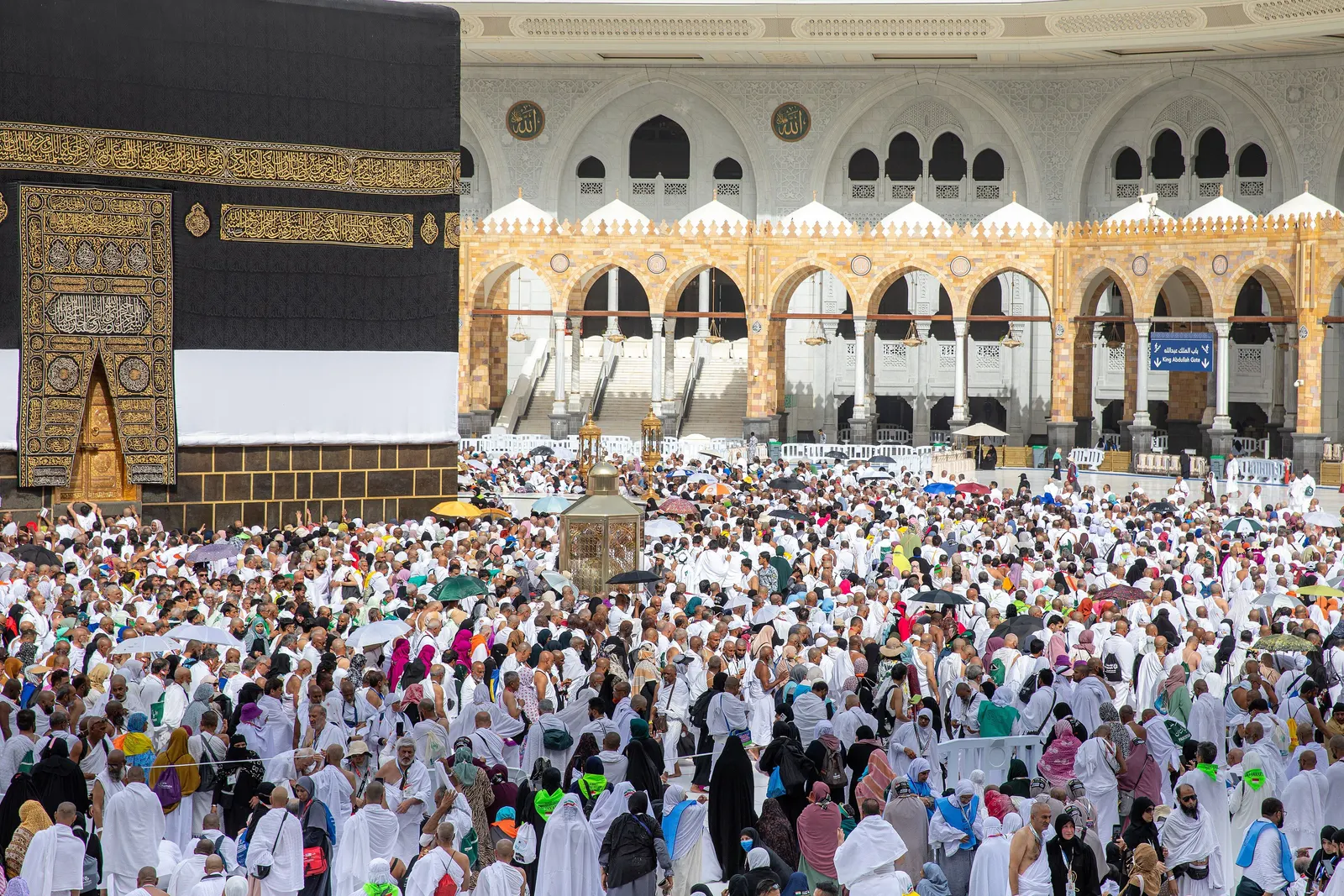
Tawaf Explained: How to Circle the Kaaba Step by Step
Tawaf is seven counter-clockwise circuits around the Kaaba, starting and ending at the Black Stone. Here is how to perform it, which floor to choose, how to keep count and what to do if prayer starts or your wudu breaks.
5 min read
Travel Planning
Large Group Umrah Planning: Families, Masjids and Communities
A large group Umrah needs one organizer, an early start, a clear rooming list, fixed payment and cancellation terms for each traveler, transport sized for the group, and a plan for the slowest members. Here is a step-by-step guide for extended families, masjids and community groups.
5 min read
Family & Senior Travel
Umrah with Elderly Parents: A Practical Planning Guide
To plan Umrah with elderly parents, choose a hotel with a short, level route to the mosque, arrange airport and mosque mobility help early, pace the trip with rest days, plan for heat and medication, and settle medical and religious questions before you go.
5 min read
Family & Senior Travel
Umrah with Children: Planning, Safety and the Rites
Children can come on Umrah and take part in the rites with their parents’ help. Plan for passports and permits early, choose a close hotel for naps, protect children in crowds with ID and meeting points, and ask a scholar about the details of a child’s Ihram.
5 min read
Family & Senior Travel
Umrah Accessibility Planning: Wheelchairs, Carts and Support
Accessible Umrah planning means arranging help at every handover: airline wheelchair assistance, an accessible transfer, a hotel with a level route, and a plan for Tawaf and Sa’i using your own chair or the mosque’s manual and electric carts, which are official services that depend on demand.
5 min read